Research interests
Atomic processes, quantitative plasma diagnostics, and applications.
My research connects microscopic collision processes with observable plasma behaviour. Experiments, atomic calculations, population-kinetic modelling, and computational methods form a linked programme: understanding how plasmas work and using that understanding to guide their applications.
Plasma sources and optical diagnostics
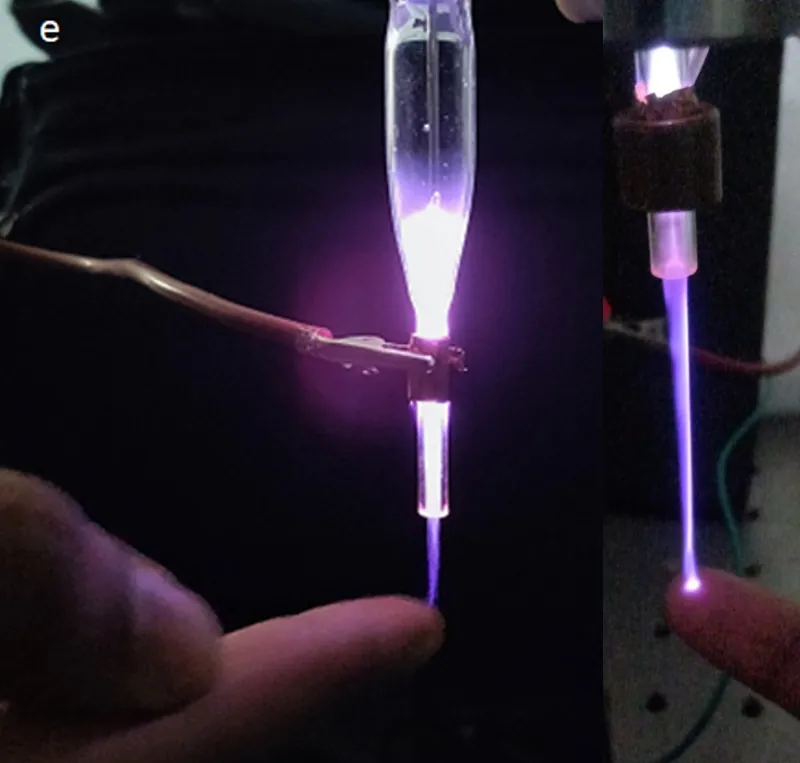
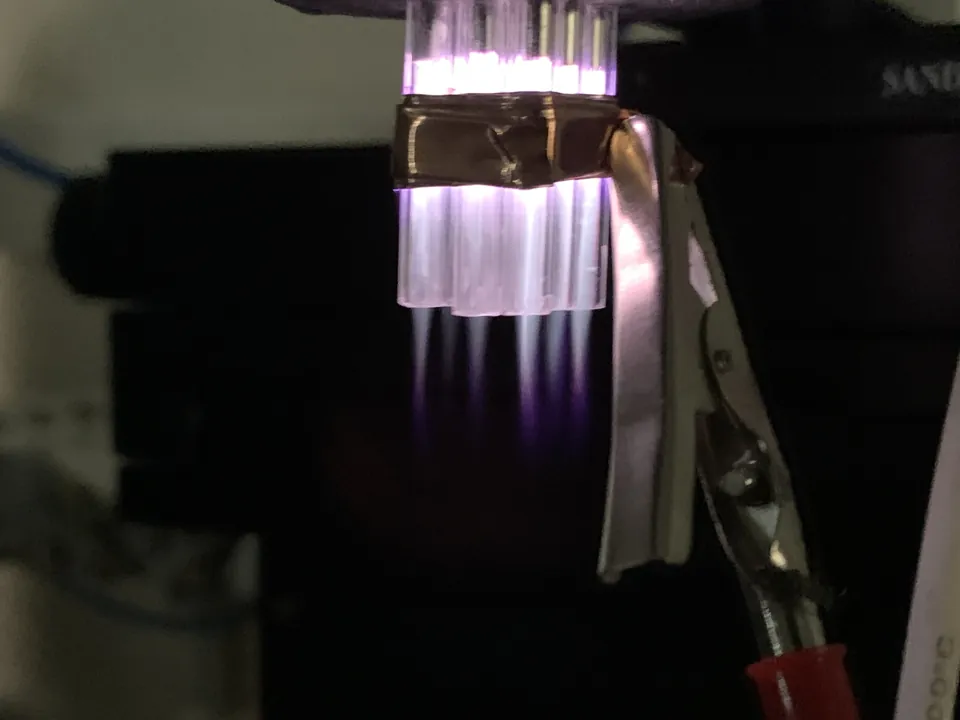
We develop low-temperature plasma systems and investigate how source geometry and operating conditions affect their behaviour. Optical emission measurements are interpreted through plasma models, linking the observed light to the processes within the discharge. Electrical measurements and reactive-species characterization complement this approach.
The central question is how quantitative diagnostics can guide the design and operation of plasma sources, rather than relying on visible discharge appearance alone.
Representative publication · 2024 — Development of efficient nonthermal atmospheric-pressure Ar-plasma jet through simultaneous spectroscopic characterization and radical quantification — Journal of Physics D: Applied Physics. Connects source characterization with reactive-species measurements.
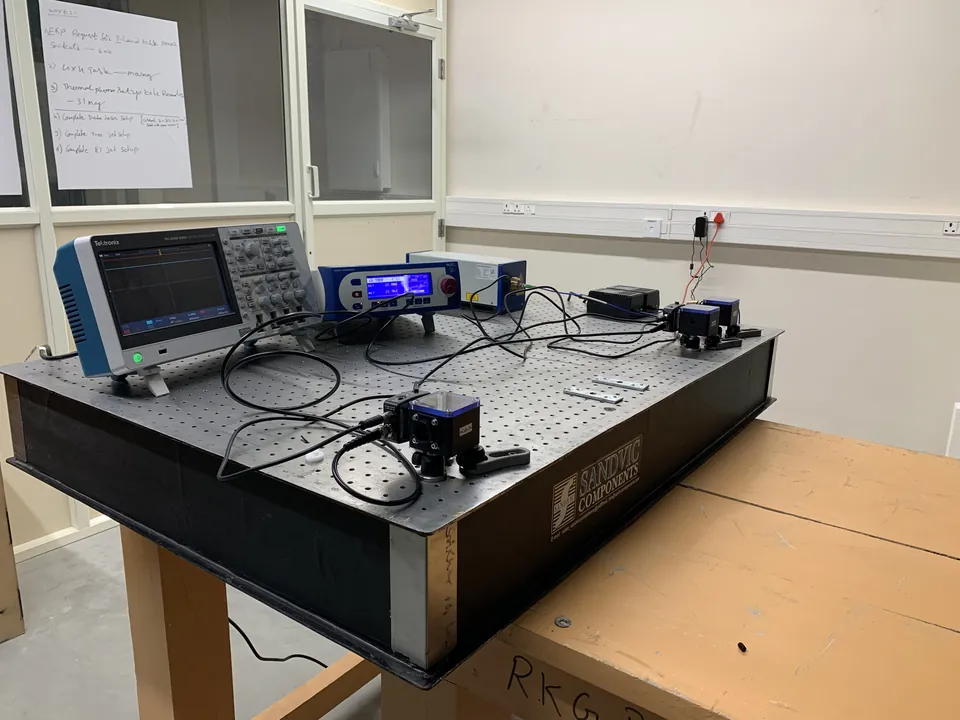
View plasma sources and diagnostic instrumentation
Atomic processes and plasma kinetics
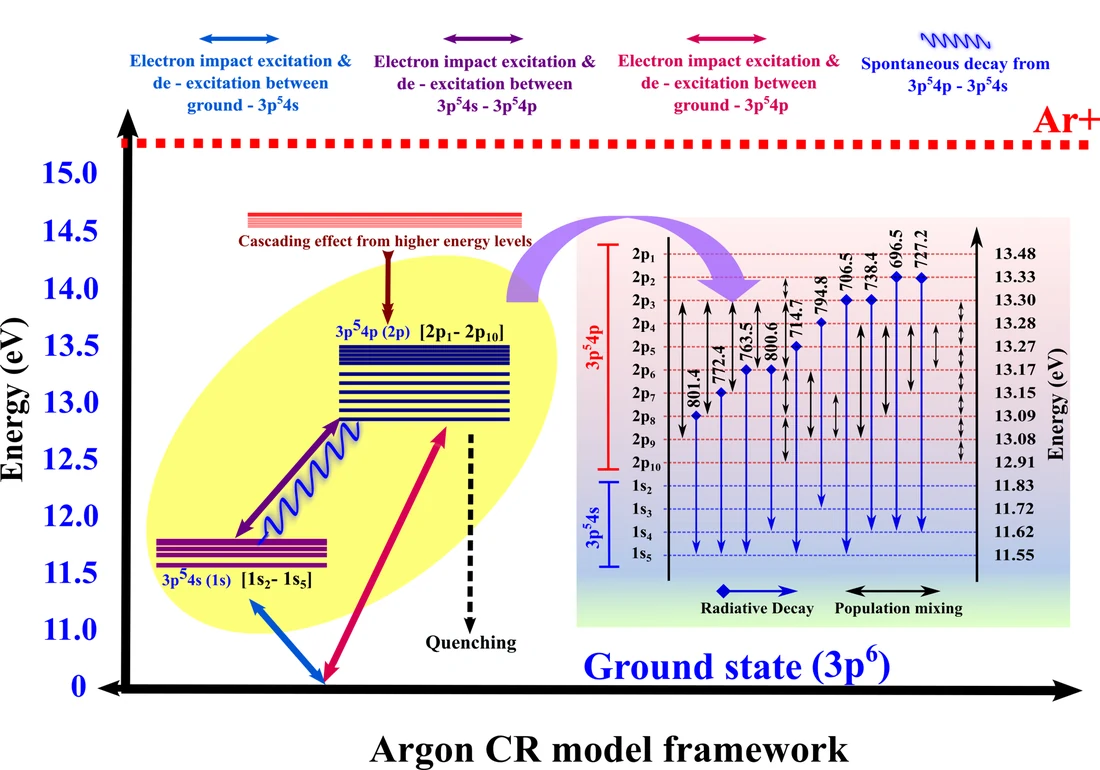
Reliable atomic data are essential for interpreting plasma spectra. We calculate electron-impact excitation cross sections and rate coefficients, resolving the fine structure needed by population-kinetic models. This connects quantum-mechanical collision calculations with the light emitted by laboratory plasmas.
Our gallium study uses a relativistic distorted-wave approach with multiconfigurational Dirac–Fock wavefunctions. It provides excitation data from ground and first excited states, together with rate-coefficient fits for use in kinetic models.
Representative publication · 2024 — Fully relativistic distorted wave calculations of electron impact excitation of gallium atom: Cross sections relevant for plasma kinetic modeling — Spectrochimica Acta Part B: Atomic Spectroscopy. Provides fine-structure-resolved data for plasma modelling.
View the argon collisional-radiative model framework
Machine learning for optical diagnostics
Collisional-radiative models provide a physical basis for extracting information from spectra, but repeated model evaluation can be computationally demanding. We investigate machine learning as a surrogate within this diagnostic workflow, linking model-generated training data with measured optical signals.
Our 2024 study combines optical emission spectroscopy and an argon collisional-radiative model with random-forest and deep-neural-network methods to estimate electron temperature in a nonthermal atmospheric-pressure plasma jet. The contribution is a connection between physics-based interpretation and rapid inference.
Representative publication · 2024 — Accelerated real-time plasma diagnostics: Integrating argon collisional-radiative model with machine learning methods — Spectrochimica Acta Part B: Atomic Spectroscopy. Integrates spectroscopy, collisional-radiative modelling, and machine learning.
Classical and quantum plasma simulation
We are developing computational approaches to atomic and plasma physics, including quantum algorithms for kinetic plasma dynamics. A key question is how accurately an algorithm reproduces physical evolution and what computational resources that accuracy requires.
Our 2026 preprint reformulates discretized linearized Vlasov–Poisson dynamics as a Hermitian Hamiltonian and compares Trotter–Suzuki and THRIFT evolution methods. The study evaluates electric-field evolution, convergence, fidelity, and quantum-resource requirements; it is a methodological comparison, not a claim of demonstrated quantum advantage.
Representative publication · 2026 · preprint — Efficient Quantum Simulation of Linearized Vlasov–Poisson Dynamics Using Trotter and THRIFT Hamiltonian Simulation Methods — arXiv:2608.23127. Explores accuracy and resource trade-offs in gate-based plasma simulation.
Plasma-mediated processing
We investigate how plasma-generated reactive species can support environmental treatment, food safety, and agriculture. Reactor geometry, discharge distribution, treatment matrix, and energy use are considered together when assessing performance.
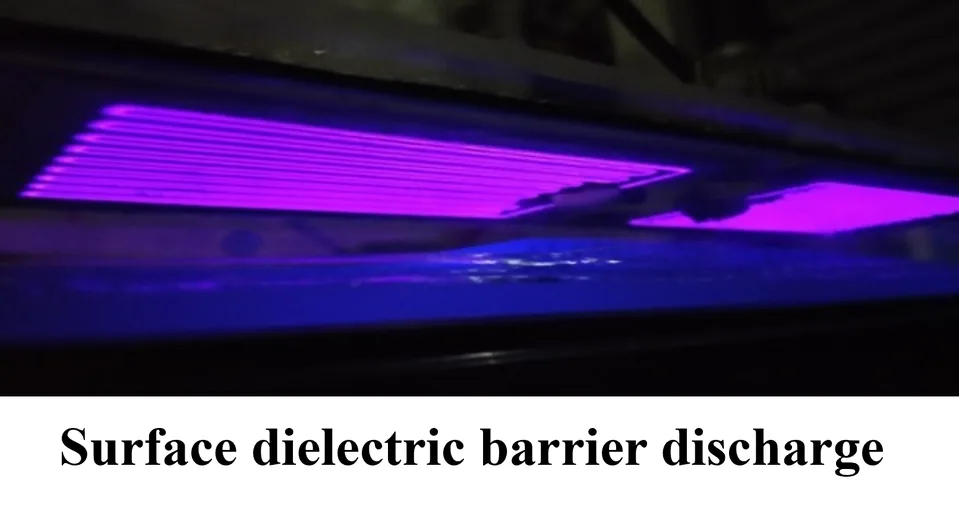
Our aflatoxin B1 study compares surface dielectric barrier and corona discharges in solid and liquid matrices. It shows why a stronger localized discharge is not automatically the better treatment: spatial coverage and matrix matter. The work also examines energy yield and changes in peanut appearance and texture.
Representative publication · 2025 — Removal of Aflatoxin B1 from solid and liquid matrices using cold atmospheric plasma reactors: Insights into reactor configurations and food quality testing — Innovative Food Science & Emerging Technologies. Connects discharge configuration with reactive-species distribution and treatment outcomes.
View the surface dielectric barrier discharge
Facilities and collaboration
The Plasma Processing Lab supports plasma-source development, optical spectroscopy and imaging, electrical characterization, reactive-species quantification, and computational modelling.
Publications · Research projects · Research group
Plasma Processing Lab · Research and facilities · Collaborators & visitors